
 ultimate-guide
Skills for Successful Prison Re-entry in 2026
Table of Contents
- Building Your 2026 Re-entry Plan: A Step-by-Step Framework
- Vocational Training and Job Placement: Career Pathways That Hire
- How to Explain Gaps in Your Resume Without Derailing the Interview
- Digital Literacy for Job Seekers: Navigating the 2026 Online Application Process
- Financial Literacy for Re-entry: Budgeting, Banking, and Building Credit
- Soft Skills for Workplace Success: Communication and Conflict Resolution
- Life Skills and Household Management: The Unseen Load of Reintegration
- Mental Health and Substance Abuse Support: Building Long-Term Resilience
- Mentorship and Coaching: Finding the Right Guide for Your Journey
- Self-Advocacy and Navigating Bureaucratic Systems
- Entrepreneurship and Self-Employment Pathways for Returning Citizens
- Common Mistakes to Avoid in Your First Year Post-Release
- Conclusion: Owning Your Transition with the Right Support
- Frequently Asked Questions
Last Updated: September 29, 2026
Building Your 2026 Re-entry Plan: A Step-by-Step Framework
Skills for successful prison re-entry in 2026 start with a written prison re-entry plan, not willpower. The Readiness for Change Institute's programs are built around a simple finding: people who map their first year in phases, with specific tasks attached to each phase, make steadier progress than those who improvise. A reentry plan is a written timeline that assigns every pre-release and post-release task to a phase, a deadline, and a person or agency responsible for it.
The plan works because it converts vague intentions into dated actions. Below, we break the first year into three phases and show exactly what belongs in each one.
Phase 1: Pre-Release Preparation (6-12 Months Before)
Start with documents, because everything else waits on them. Request your birth certificate, Social Security card, and state ID through your counselor's office at least six months before your release date. These take weeks to process, and without them you cannot open a bank account, start a job, or sign a lease.
Next, build your release account and confirm your housing plan in writing. If you are transferring to a halfway house or a family member's home, get the address and expectations confirmed before your date. Parole compliance often depends on having a verifiable address from day one.
Then work on employment readiness: draft a resume, collect names of former employers, and ask your case manager about workforce development referrals. A common mistake is waiting until release week to request transcripts or training certificates. Request them now.
Phase 2: The First 72 Hours After Release
The first 72 hours set the tone for everything that follows. Report to your parole or probation officer within the timeframe your release paperwork specifies, usually within 24 to 72 hours. Bring your release documents, your ID application receipts, and your housing address.
Then handle three tasks in order: get your state ID or driver's license, activate a phone number, and open a bank account. Many banks accept a state ID plus a release document as proof of identity. If you have no funds, ask your officer or a community case manager about emergency assistance programs.
Sleep and food matter more than they seem. Post-release instability often traces back to exhaustion and skipped meals in the first week.
Phase 3: The First 90 Days of Stability
The first 90 days are about rhythm, not achievement. Establish a fixed weekly schedule: work or job search blocks, treatment or counseling appointments, and one recurring social support commitment.
Keep every appointment, even the ones that feel pointless. Parole compliance is largely a record of showing up. Missed appointments become violations, and violations become revocations.
Build one relationship with a mentor, case manager, or faith or community group that knows your situation. Post-release stability correlates less with willpower than with having at least one person who checks in.
Vocational Training and Job Placement: Career Pathways That Hire
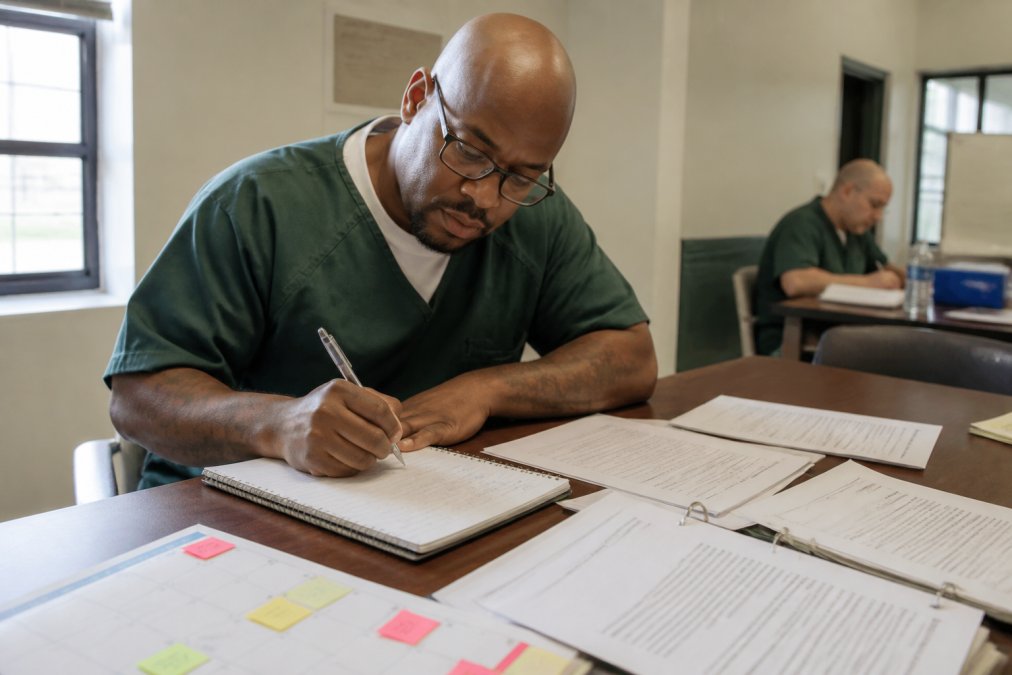
Vocational training pays off fastest when it targets a field with actual openings. Welding, HVAC, commercial driving, culinary work, and building trades remain the most reliable pathways for returning citizens because they hire on demonstrated skill and certifications rather than background checks alone.
A common mistake is collecting certificates that no local employer asked for. Before enrolling in any program, call three employers in that field and ask what credential they require. Then enroll in that specific program.
Second chance hiring has expanded across logistics, manufacturing, food service, and construction. Workforce development boards and American Job Centers connect job seekers to these employers, and many offer free training vouchers for people on parole or probation.
Job placement works best when it starts before release. Ask your counselor about work release, apprenticeship, and pre-apprenticeship programs. Arriving at your first post-release interview with a completed training certificate changes the conversation.
How to Explain Gaps in Your Resume Without Derailing the Interview
How to explain gaps in a resume comes down to one rule: name the gap briefly, then pivot to what you did with the time. Interviewers are not entitled to your entire history, and you are not required to volunteer details that invite discrimination.
Use a functional resume format. Lead with skills and certifications, and place employment dates in a separate section. This puts your capabilities first and your timeline second.
When asked directly, answer in one sentence and move on. "I was out of the workforce for a period and used that time to complete [certification]." Then redirect: "I'm looking for a role where I can apply that training."
Practice the answer out loud at least ten times before your first interview. Rehearsal removes the tremor from your voice, and the tremor is what interviewers react to, not the gap itself.
Digital Literacy for Job Seekers: Navigating the 2026 Online Application Process
Digital literacy for job seekers is now a baseline requirement, not a bonus skill. Nearly every application, interview scheduling tool, and onboarding system runs online, and a single missed email can cost you a job.
Start with three practical skills: creating and managing an email account, uploading documents to web forms, and joining a video call. Practice each one on a library computer or a reentry program's device before you need it for real.
Job applications now route through applicant tracking systems that scan for keywords. Read the job posting, copy the exact phrases it uses for skills, and put those phrases in your resume. A human never sees your application until software passes it through.
Set up a simple system to avoid missed steps: a notebook with every application's date, company, and login. Check your email daily, including the spam folder. Interview invitations often arrive with short deadlines.
Federal Trade Commission guidance on identity theft and personal information is worth reading before you enter personal details into unfamiliar job sites. Fake listings that harvest Social Security numbers are a real risk for first-time online applicants.
Financial Literacy for Re-entry: Budgeting, Banking, and Building Credit
Financial literacy for re-entry begins with a bank account and a written budget. Without both, cash disappears into fees, check cashers, and impulse spending within weeks.
Open a checking account at a bank or credit union that accepts a state ID and does not require a credit check. Many mainstream banks now offer second chance accounts designed for people with damaged or no credit history.
Build a zero-based budget on paper. List every dollar of expected income, then assign every dollar to rent, food, transportation, phone, and savings. If the numbers do not balance, cut before the month starts, not after.
Rebuilding credit takes time and one small habit. A secured credit card, backed by a deposit you control, reports to credit bureaus when you use it and pay it off monthly. Keep the balance below a third of the limit.
Payday loans and car title loans carry triple-digit annual rates and trap borrowers in renewal cycles. If you need emergency cash, ask a case manager about community assistance programs first.
Soft Skills for Workplace Success: Communication and Conflict Resolution
Soft skills for workplace success decide whether you keep a job after you get it. Employers consistently say they can train technical tasks but cannot teach reliability, tone, and teamwork.
Four skills matter most in the first year:
- Punctuality. Arrive ten minutes early, every shift. Tardiness is the fastest route to termination.
- Receiving correction. When a supervisor corrects you, say "understood" and adjust. Do not explain or defend.
- Conflict de-escalation. Lower your voice, step back, and ask a question instead of making a statement.
- Asking for help. Request clarification early rather than guessing and failing later.
Interpersonal communication in a workplace looks different from communication inside a facility. Sarcasm, hierarchy games, and guardedness that protected you inside read as hostility outside. Watch how coworkers speak to each other and match that register.
Cognitive behavioral therapy techniques help here too. Noticing the thought before it becomes a reaction is the same skill in a break room as in a counseling session.
Life Skills and Household Management: The Unseen Load of Reintegration
Life skills coaching covers the tasks nobody assigns you after release. Household management is the daily logistics of running a life, and it overwhelms people who never had to do it alone.
The core list is short but relentless:
- Paying rent and utilities on time, and knowing what happens when you do not
- Grocery shopping and cooking on a fixed budget
- Scheduling and attending medical, dental, and court appointments
- Keeping a lease, a phone plan, and insurance current
- Managing a household with roommates or family without conflict
A practical tool: a single wall calendar with every bill due date, appointment, and work shift written on it. Check it every morning. Most post-release crises are missed dates, not bad decisions.
Community integration also means knowing your neighborhood's resources: the library, the transit routes, the food pantry, the clinic. Spend your first month mapping them.
Mental Health and Substance Abuse Support: Building Long-Term Resilience
Mental health and substance abuse support are not optional add-ons to a reentry plan. They are the load-bearing wall. Untreated conditions drive most returns to custody, and treatment works when it is continuous rather than episodic.
Connect with a community mental health center within your first two weeks. If you were on medication inside, bring your discharge summary to your first appointment so the prescriber can continue your regimen without a gap.
Substance abuse counseling comes in several formats: outpatient programs, intensive outpatient programs, and peer-led recovery groups. Choose based on your schedule and your history, and attend consistently rather than intensely for a short period.
Long-term psychological resilience builds through small routines: sleep at the same time, move your body daily, and keep one honest relationship where you can say the difficult thing out loud. Resilience is a practice, not a personality trait.
Substance Abuse and Mental Health Services Administration national helpline provides free, confidential referrals to local treatment options.
Mentorship and Coaching: Finding the Right Guide for Your Journey
Mentorship works when the mentor has walked a similar path and stays in contact on a schedule. A mentor is not a cheerleader. The useful ones ask hard questions and hold you to commitments.
Where to find one: reentry programs, faith communities, workforce development boards, and peer recovery networks. Many match mentors formally and require a weekly check-in, which is exactly the structure that helps.
What to look for in a mentor:
- Personal experience with incarceration or reentry
- Willingness to meet or call on a fixed schedule
- Connections to employers, housing, or services you need
- Honesty about their own limits
Coaching differs from mentoring in one way: coaches work from a structured model with assessments and progress measures. The Readiness for Change Institute uses a proprietary, evidence-based change model built from decades of study, designed to help participants assess where they stand, build essential skills, and take concrete next steps.
Self-Advocacy and Navigating Bureaucratic Systems
Self-advocacy is the skill of getting a system to act on your case. Most returning citizens lose benefits, housing, or jobs not because they were denied, but because a form sat unprocessed and nobody followed up.
Keep a case file. Every document, every phone call, every name and date goes in one folder, paper or digital. When you call an agency, write down the representative's name and the reference number.
Follow up on a schedule. If an agency says ten business days, call on day eleven. Polite persistence moves files; anger stalls them.
Know the appeals process for every benefit you apply for. If you are denied, the denial letter states your deadline and the address to appeal to. Missing that deadline is the most common way people lose benefits they qualified for.
Barrier removal often requires documentation from the courts, such as a certificate of rehabilitation or a record-sealing petition. Ask a legal aid office or reentry legal clinic what you qualify for.
Entrepreneurship and Self-Employment Pathways for Returning Citizens
Entrepreneurship offers a path around background-check barriers, but it is not an escape from work. Self-employment means finding customers, keeping records, and paying taxes, often with no steady paycheck at first.
Start with a skill you already have: landscaping, detailing, cooking, repair, hauling, or barbering. Register a sole proprietorship, which is the simplest business structure, and get any license your trade requires.
Then handle the basics:
- Open a business bank account separate from your personal account
- Track every expense and every payment from day one
- Set aside money for quarterly taxes
- Get a business phone number and a simple online presence
U.S. Small Business Administration startup guide walks through registration, licensing, and free counseling through its local offices. Many cities also run small business development centers with free advising.
Keep the business small until it is stable. A side business alongside a steady job is the lower-risk route.
Common Mistakes to Avoid in Your First Year Post-Release
The most common mistakes are predictable, which means they are preventable. Here are the ones that derail the first year, with the fix for each.
| Mistake | Why It Happens | The Fix |
|---|---|---|
| Missing a parole appointment | No calendar or reminder system | One wall calendar, checked daily |
| Taking the first job offer, then quitting | No plan for transportation or schedule | Confirm shifts and transit before accepting |
| Spending the first paycheck | No budget in place | Write a zero-based budget before payday |
| Isolating after a setback | Shame and fear of judgment | Call one person within 24 hours |
| Ignoring a denial letter | Assuming it is final | Read it for the appeal deadline and file |
| Skipping treatment when things improve | Feeling cured | Stay in treatment through the first year |
A common mistake is treating early success as proof that structure is no longer needed. The first year is when structure matters most, not least.
Conclusion: Owning Your Transition with the Right Support
Reentry in 2026 rewards preparation over improvisation, and the difference between the two is usually a plan and a person who holds you to it. The Readiness for Change Institute builds programs around that idea: a proprietary, evidence-based change model that helps participants assess their current standing, build essential skills, and take actionable steps toward their goals. Programs are tailored for both justice system transitions and higher education pathways, with structured support for personal development at every stage.
Explore our Programs to find the track that fits where you are right now, and start your reentry plan with support that is built to last.
Frequently Asked Questions
What are the three key elements of successful reentry programs?
Most effective programs focus on three areas: vocational training for employment readiness, cognitive behavioral therapy to address thinking patterns, and strong social support systems. These elements work together to reduce recidivism. A reentry plan that includes job placement assistance, mental health support, and mentorship addresses the practical and psychological barriers returning citizens face. Programs that combine hard skills with soft skills training show the best outcomes for post-release stability.
How do I explain gaps in my resume during job interviews?
Be honest and brief. Focus on what you did during that time that relates to the job, such as vocational training, educational courses, or volunteer work. If the gap was due to incarceration, you can say you were addressing personal matters and are now focused on building a career. Practice your answer so it sounds natural. Then pivot to your current skills and enthusiasm for the role. Employers value honesty and a forward-looking attitude.
What digital literacy skills are most important for re-entry in 2026?
In 2026, digital literacy for job seekers means more than basic computer use. You need to navigate online job boards, use video conferencing for interviews, and manage digital documents. Understanding how to create a professional email, fill out online applications, and use cloud storage is essential. Many entry-level jobs also require comfort with point-of-sale systems or inventory software. Building these skills before release can significantly improve your employment readiness.
How successful are reentry programs in reducing recidivism?
Research indicates that comprehensive reentry programs can contribute to reducing recidivism when they include vocational training, cognitive behavioral therapy, and housing support. Success depends on program quality and individual engagement. However, no program guarantees outcomes. Personal commitment to change and a strong support network are critical factors. The Readiness for Change Institute's model focuses on building these internal and external resources.
What financial literacy skills are most important after release?
Prioritize budgeting, banking, and credit building. Financial literacy for re-entry starts with creating a monthly budget that covers essentials like rent, food, and transportation. Open a bank account and learn to use debit cards and online banking. Avoid payday loans and high-interest credit. Building credit takes time; consider a secured credit card and pay it off monthly. Understanding these basics helps you avoid debt traps and achieve post-release stability.
What soft skills are most valued by employers for returning citizens?
Employers value reliability, communication, and teamwork. Soft skills for workplace success include showing up on time, taking direction, and resolving conflicts professionally. Practice active listening and clear speaking. Many reentry programs offer workshops on these skills. Being able to work with diverse coworkers and manage stress on the job is crucial. These skills often matter more than technical ability for entry-level positions and can lead to career pathways.