 ultimate-guide
Personal Growth Coaching for Parolees: A 2026 Guide
Table of Contents
- How Personal Growth Coaching for Parolees Works
- Why Coaching Cuts Recidivism and Builds Self-Sufficiency
- Comparing Re-Entry Life Coaching Programs
- Essential Life Skills Training for Parolees
- Handling Legal and Parole-Specific Constraints
- How to Choose a Re-Entry Coach That Fits
- Start Your Coaching Journey Today
- Frequently Asked Questions
Last Updated: September 8, 2026
How Personal Growth Coaching for Parolees Works
Personal growth coaching for parolees is a structured, one-on-one process that helps returning citizens rebuild their identity, decision-making habits, and daily routines after incarceration. Unlike casual mentorship, it pairs a trained professional with an individual to set measurable goals around employment, family, finances, and emotional stability.
The typical coaching arc begins with an honest self-assessment. You identify where you are now, what triggers old patterns, and what you actually want for your life six months out. From there, sessions focus on one domain at a time: budgeting, job interviews, conflict at home, or managing parole officer check-ins. The coach acts as an accountability partner, not a therapist.
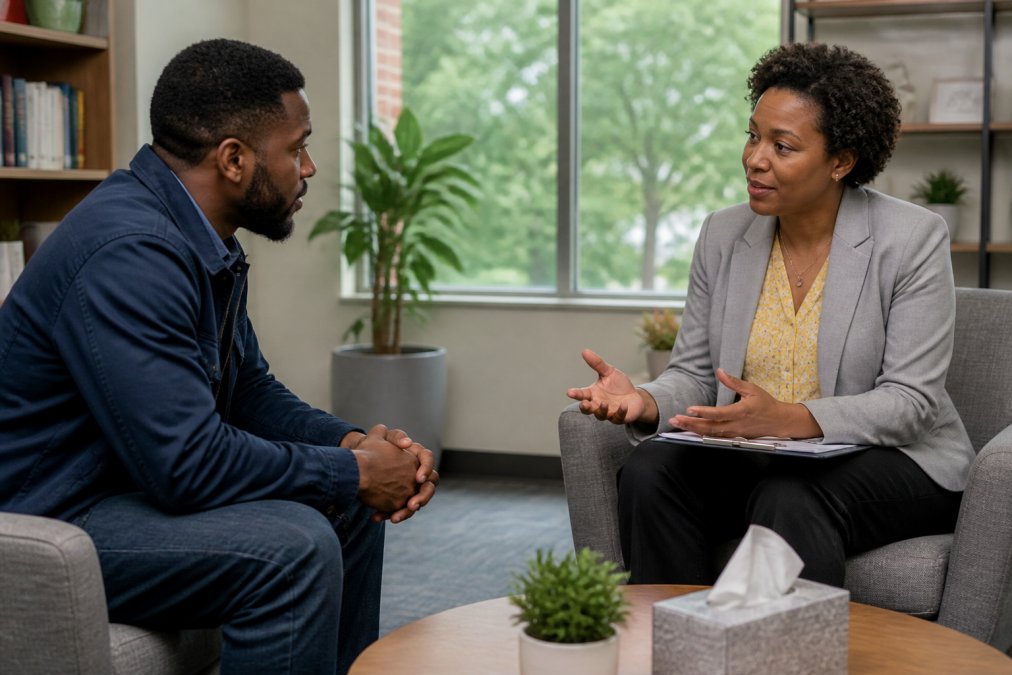
Most sessions run 45 to 60 minutes weekly, with structured homework between meetings. By the third month, you should have a portfolio of small wins: a completed budget, a stable housing plan, or a signed job offer.
Why Coaching Cuts Recidivism and Builds Self-Sufficiency
Coaching works because it replaces passive waiting with active, daily skill-building. Recidivism often follows a predictable pattern: release, isolation, financial pressure, and a return to familiar environments. Personal growth coaching interrupts that cycle with a weekly anchor and clear next steps.
The mechanism is straightforward. When you have a specific goal, a deadline, and someone checking your progress, you make different choices. This is why cognitive behavioral coaching, which focuses on recognizing and changing unhelpful thought patterns, is a core component of effective reentry support. It is not about telling you what to do; it is about rewiring how you respond to stress and setbacks.
Self-sufficiency is the longer-term payoff. Coaching helps you move from relying on others for direction to managing your own life. That includes building emotional intelligence so you can handle rejection at a job interview or a tense conversation with a family member without spiraling. The National Institute of Justice has documented that reentry programs focused on skill development and cognitive behavioral approaches tend to produce better outcomes than programs that only provide basic services.
Comparing Re-Entry Life Coaching Programs
Not all re-entry life coaching programs are equal. The market splits into two broad camps: those that emphasize certification and those that emphasize evidence-based methods. The best programs blend both, but you should know what you are paying for before you commit.
Certification and Evidence-Based Methods
A certified life coach has met professional standards, signaling baseline competence. However, certification alone does not guarantee the coach understands parole conditions, housing restrictions, or hiring stigma. Look for a program grounded in behavioral-change research with a structured curriculum.
Evidence-based methods matter because they are repeatable. A program built on cognitive behavioral coaching gives you specific tools for reframing negative thoughts, which you can practice between sessions. If a provider cannot explain the methodology behind their approach, that is a red flag.
Trauma-Informed and Cognitive Behavioral Coaching
Trauma-informed care is the difference between a coach who listens and a coach who understands. Many returning citizens carry trauma from incarceration itself, and standard motivational talk can feel hollow or even dismissive. A trauma-informed coach adjusts their pace, language, and expectations accordingly.
Cognitive behavioral coaching adds a practical layer. It teaches you to catch automatic thoughts like "I will never get hired" and test them against reality. Over time, this builds a mindset shift from helplessness to agency. When comparing programs, ask directly whether trauma-informed techniques and cognitive behavioral methods are part of the curriculum. If the answer is vague, keep looking.
Essential Life Skills Training for Parolees
Life skills training for parolees is the practical backbone that makes personal growth coaching stick. Coaching addresses mindset; skills training covers the mechanics of daily survival: managing money, finding work, and communicating effectively. You need both.
Financial Navigation and Budgeting
Financial stress is one of the fastest routes back to old patterns. Many parolees leave incarceration with supervision fees, court fines, restitution, or child support obligations and no clear plan to meet them. A good program teaches you to build a bare-bones budget from your first paycheck, prioritize mandatory payments, and avoid predatory financial services.
Start with a simple ledger. List every fixed cost: rent, transportation to parole appointments, phone bill, and required program fees. Then track every dollar for two weeks. The goal is not deprivation; it is clarity.
A common pattern is that returning citizens receive a first paycheck and immediately face pressure to pay back debts or help family. Setting up a nominal $25 monthly payment toward restitution demonstrates responsibility without crippling your budget. Many courts accept this structured approach, and documenting it can work in your favor during check-ins.
Career Readiness and Overcoming Employment Barriers
Employment barriers for returning citizens are real, from background check questions to gaps in work history. Career readiness coaching addresses this head-on with interview preparation, resume building, and honest conversations about disclosure. You need a script for the "conviction question" that is truthful without being self-defeating.
A common mistake is waiting until you have a job offer to think about this. Practice interviews should happen early, while you are still building confidence. Role-playing tough questions with your coach reduces anxiety and sharpens your answers. The U.S. Equal Employment Opportunity Commission guidance on arrest and conviction records makes clear that blanket bans on hiring people with records can violate civil rights laws, which is useful context when you negotiate.
The deeper skill is knowing how to frame your narrative. Instead of saying, "I made mistakes," practice saying, "I took responsibility and completed a structured program; here is what I can do for your company." This shift from shame to agency is a core coaching technique.
Trauma-Informed Communication for Daily Life
Most life skills guides stop at budgeting and interviews, missing the relational layer that determines whether those skills stick. Many returning citizens carry trauma from incarceration, hypervigilance, difficulty trusting authority, or shutting down under stress. A trauma-informed coach understands that a supervisor's correction or a tense family conversation can trigger a fight-or-flight response.
A practical tool is the "pause and check" method. When you feel your chest tighten or your voice rise, you pause, take a breath, and ask yourself: "What is the actual threat here?" This is not therapy; it is a self-regulation skill that prevents you from reacting in ways that jeopardize your job or your parole.
Another technique is "grounding before speaking." Before a difficult conversation, take 60 seconds to name three things you can see and two things you can hear. This interrupts catastrophic thinking and lets you respond rather than react.
Handling Legal and Parole-Specific Constraints
Coaching must operate within the reality of your parole conditions. Curfews, travel restrictions, and mandatory meetings are not obstacles to work around; they are the framework your plan must fit inside.
Your coach should help you build a schedule that respects these constraints. If you cannot travel outside your county, focus job searches on local employers. If you have a curfew, look for daytime or remote classes.
Communication with your parole officer is another critical skill. Many parolees avoid contact until there is a problem, which creates suspicion. Coaching can help you prepare for check-ins, document your progress in life skills training, and present your achievements as evidence of change. The official guidance from the U.S. Department of Justice on successful reentry emphasizes that employment and stability are the strongest indicators of desistance from crime.
The Parole Check-In as a Coaching Milestone
A concrete mechanism most guides overlook is treating the parole check-in as a coaching milestone. A strong coach helps you prepare a one-page progress summary before each meeting, listing accomplishments since the last check-in, current challenges, and next steps.
This shifts the dynamic from passive reporting to active demonstration. Parole officers are more likely to advocate for you when they see documented effort. The goal is accountability, not perfection.
Family Reunification as a Parole Condition
One of the most overlooked constraints is the family dynamic. Many parole conditions require you to live with a family member or approved sponsor, tying your home life directly to your legal status. A conflict at home can threaten your housing and, by extension, your parole.
Coaching that addresses family reunification is rare but essential. The first step is a structured conversation about what your family expects and what you need from them. Family members are often either overly suspicious or overly permissive; neither extreme helps. A coach can help you set respectful but clear boundaries.
A practical tool is the "family agreement," a written document created with your coach outlining expectations on both sides. It might state that you will contribute $100 weekly to household expenses, inform family if you will be late, and that family members will not bring up your incarceration during arguments. It is not a legal contract but creates a shared reference point.
Navigating Employment and Housing Restrictions
Beyond family, the most common legal constraints involve employment and housing. Some parole conditions restrict you from working in certain fields, healthcare, finance, or jobs involving vulnerable populations, even if your offense was unrelated. A coach who understands these restrictions helps you target realistic industries from the start.
Housing restrictions may bar you from living near schools or parks, eliminating many affordable neighborhoods. A coach can help you identify approved options and prepare documentation for a landlord, including a letter from your parole officer and a reference from your coach or sponsor.
Coaching does not fight the system; it works within it strategically. By understanding your conditions, documenting progress, and addressing family dynamics, you turn legal constraints from a source of anxiety into a structured framework for success.
How to Choose a Re-Entry Coach That Fits
Choosing a re-entry coach is a personal decision; fit matters as much as credentials. You will share difficult details about your life, so you need someone who listens without judgment but still pushes you toward your goals. Here is a practical checklist:
- Ask about their experience with justice-involved clients specifically, not just general life coaching.
- Request a clear explanation of their methodology and how they measure progress.
- Confirm they understand parole conditions and can work within legal constraints.
- Discuss cost openly and ask about sliding-scale fees or financial aid before you commit.
- Trust your instinct on rapport; a technically skilled coach who makes you feel defensive will not help.
A strong coaching relationship produces a concrete plan within the first few sessions. If you leave a meeting without a clear next step, the program is not structured enough.
| What to Evaluate | Questions to Ask | Why It Matters |
|---|---|---|
| Relevant Experience | Have you coached other returning citizens? | Contextual understanding of parole realities |
| Methodology | What framework guides your sessions? | Evidence-based methods produce repeatable results |
| Legal Awareness | Can you work within my parole conditions? | Prevents coaching that causes violations |
| Cost & Access | Are sliding-scale options available? | Financial aid reduces barriers to participation |
| Personal Rapport | Do I feel heard and challenged? | Trust enables honest, productive sessions |
Start Your Coaching Journey Today
The gap between wanting to change and actually changing is filled with practical steps, and that is where structured coaching earns its place. Personal growth coaching for parolees offers a path that is neither naive nor defeatist. It requires your effort, but you do not have to build the roadmap alone.
At The Readiness for Change Institute, our evidence-based programs are designed specifically for people navigating major life transitions, including reentry after incarceration. Our proprietary model helps you assess where you are, build the skills that matter, and take actionable steps toward your goals. If you are ready to move from intention to demonstrated progress, explore our programs and start building your new chapter.
Frequently Asked Questions
What is the difference between a life coach and a parole officer?
A parole officer is an enforcing agent of the court. Their role centers on monitoring compliance with release conditions and public safety. A re-entry life coach is a supportive partner focused on your personal growth. They are not part of the legal system, which allows for open conversations about struggles. Coaches help you build goal setting and life skills, while your officer tracks legal requirements. Both roles matter, but they serve different functions in your transition.
How do I find a reputable personal growth coach for parolees?
Look for a certified life coach with specific experience in re-entry and justice-involved populations. Ask about their training in trauma-informed care and cognitive behavioral coaching. A quality coach will be transparent about their methods and outcomes. Inquire if they understand parole-specific constraints and the local job market. The best fit is someone who balances accountability with empathy, offering a structured plan that addresses your unique barriers.
What makes re-entry life coaching programs different from generic life coaching?
Generic coaching often assumes a stable foundation. Re-entry life coaching programs are built for the reality of returning from incarceration. They address specific hurdles like parole conditions, employment barriers, and rebuilding family trust. These programs integrate life skills training for parolees with practical steps for community integration. A specialized coach understands that you may be starting from zero and focuses on building self-sufficiency within legal boundaries, which creates a more relevant and effective experience.
Can you guarantee this will help me get a job after I'm released?
No honest program can guarantee a specific job. However, personal growth coaching for parolees focuses on the factors within your control: building career readiness, practicing interview skills, and developing a plan to explain your history. Coaching helps you build the accountability and mindset shift that employers look for. It also prepares you to navigate legal questions about your record. The goal is to make you the strongest candidate you can be, not to promise a specific outcome.